Alchemical Emblem Books
Alchemy told in pictures: the emblem books of the sixteenth and seventeenth centuries.
In the late sixteenth and seventeenth centuries alchemy found a new language: the emblem. Engraved images of kings and queens, lions, dragons, suns and moons, each paired with a motto and verse, set out the stages of the Great Work in a form meant to be contemplated as much as read.
This shelf gathers the most celebrated of these books. Michael Maier’s Atalanta Fugiens (1617) combines fifty emblems with epigrams and musical fugues. The Splendor Solis is a sumptuous sequence of painted allegories. The Mutus Liber of 1677 tells its story with no text at all, and Basil Valentine’s Twelve Keys became one of the most copied image cycles in alchemical history.
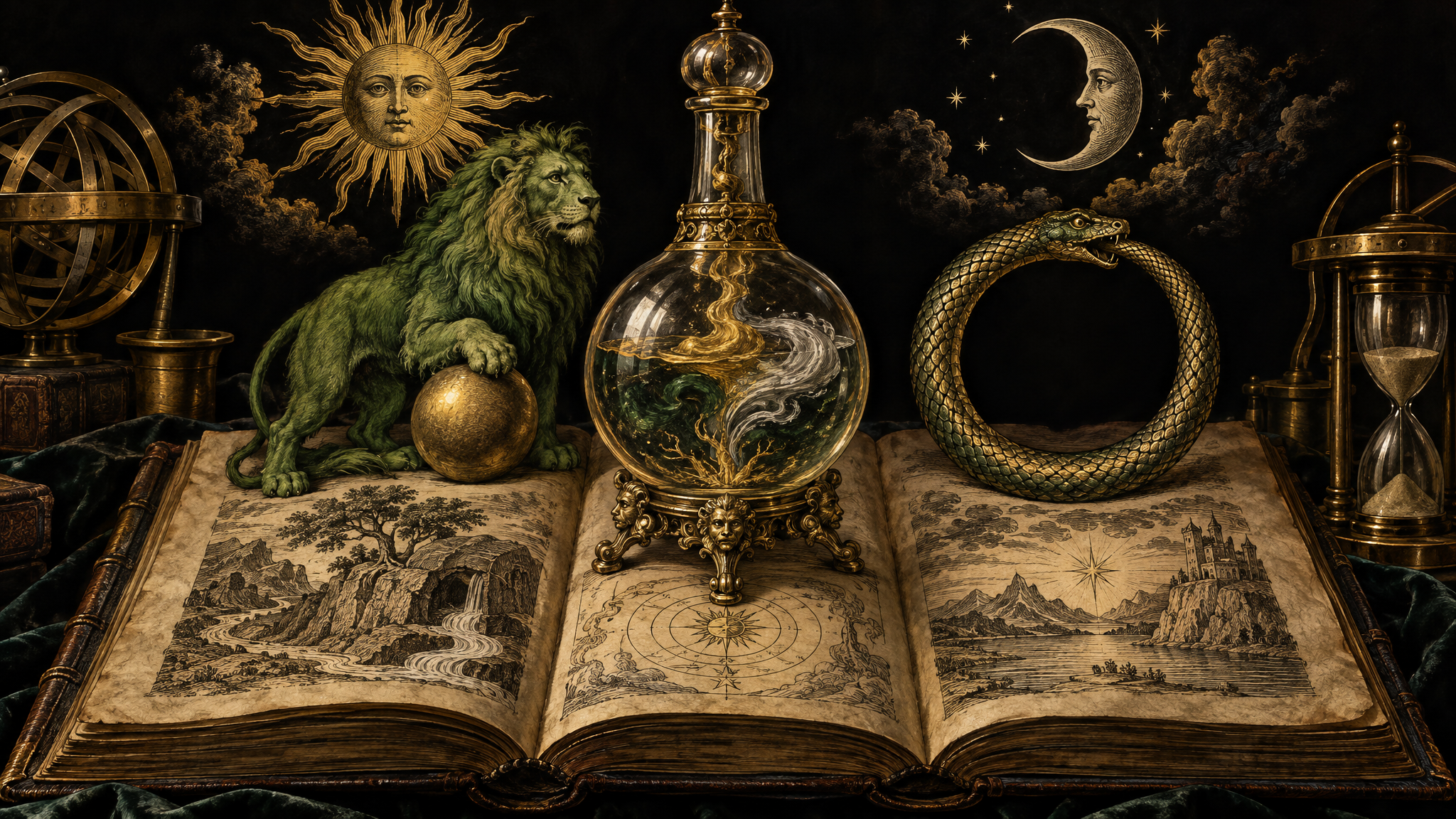
Read these books slowly, image by image. Each emblem compresses a stage of the work, a substance or a principle into a single scene, and the same motifs recur across authors: the marriage of sun and moon, the green lion devouring the sun, the ouroboros. Where the archive holds a scan of an original edition, look at the engravings themselves rather than relying on descriptions. Alongside the Hermetic Museum, which reprints many of the accompanying texts, these books show how alchemists taught through the eye.
On This Shelf (10)
Splendor Solis: Alchemical Treatises of Solomon Trismosin
Salomon Trismosin
Hermetico-Spagyrisches Lustgärtlein : Darinnen Hundert vnd Sechtzig vnterschiedliche, schöne, Kunstreiche, Chymico-Sophische Emblemata, oder Geheymnußreiche Sprüche der wahren Hermetischen Philosophen ; Sampt beygefügten, noch vier grossen, schönen vnnd tieffsinnigen Theosophischen Figuren ; Nicht allein sehr dienstlich, Augen vnnd Gemüt dardurch zu erlustigen, sondern zugleich ein scharffes nachdencken der Natur, bey allen Filiis Doctrinae, zuerwecken
Anonymous
The Chemical Wedding of Christian Rosenkreutz
Johann Valentin Andreae