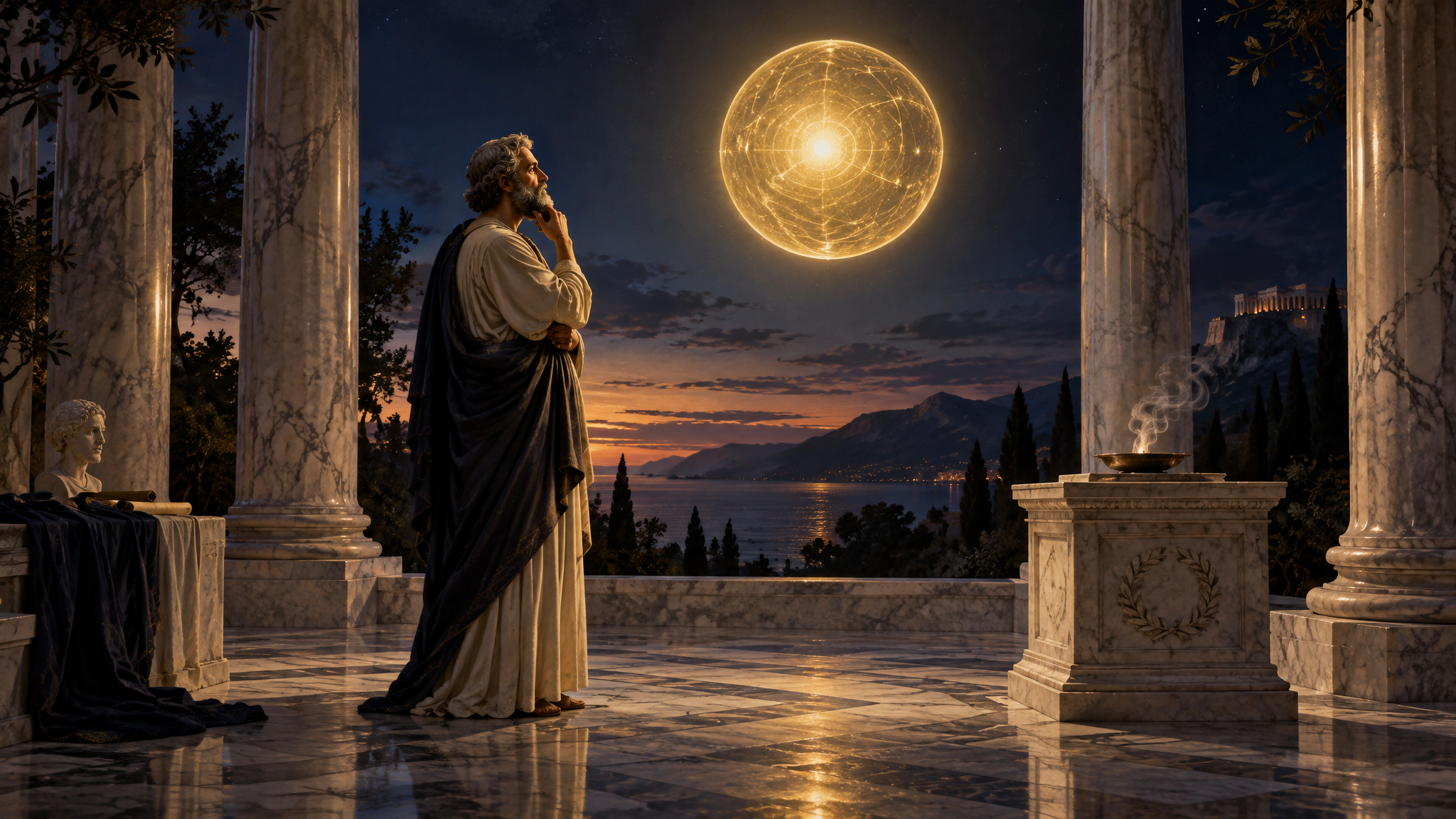
Neoplatonism and Theurgy
Philosophy that became a path of ascent, and ritual that became philosophy.
Neoplatonism is the last great school of ancient Greek philosophy, founded by Plotinus in the third century and carried on by Porphyry, Iamblichus and Proclus. It taught that all reality flows from a single ineffable source, the One, and that the soul can return to it.
Theurgy, literally “divine work”, is the ritual side of that return. Iamblichus defended it against Porphyry’s doubts, and the debate shaped Western ideas of magic, sacrament and contemplation for a thousand years.
What It Is
The Neoplatonic cosmos descends in stages: the One, Intellect (Nous), Soul, and finally Nature and matter. Each level contemplates the one above it. Philosophy is the discipline of turning the soul back up that ladder.
The theurgists held that reason alone cannot complete the ascent; the gods must be met through rites, symbols and sacred names, many of them drawn from the Chaldean Oracles, a second-century collection of hexameter verses treated almost as scripture.
Why It Matters
Through Dionysius the Areopagite, Neoplatonism entered Christian mysticism; through Ficino’s translations it fed the Renaissance revival of Hermeticism and magic. Nearly every later theory of correspondences and spiritual ascent in this library has a Neoplatonic skeleton.
Core Texts
Pythagorean, Chaldean and Neoplatonic sources in their classic English translations, many by Thomas Taylor.
Iamblichus on the Mysteries of the Egyptians Chaldeans and Assyrians
Iamblichus
Iamblichus on the Mysteries of the Egyptians Chaldeans and Assyrians
Iamblichus
English · Neoplatonism & Theurgy
A Beginner’s Sequence
The Pythagorean inheritance
Iamblichus’s Life of Pythagoras and the Golden Verses show the ascetic, number-mystical ideal the Neoplatonists claimed as their ancestry.
The oracles
Short, cryptic fragments. Read them for their images of fire, light and ascent, which later theurgists interpreted line by line.
The defence of theurgy
Iamblichus’s reply to Porphyry is the central text: why rites and symbols, not reasoning alone, unite the soul with the gods.
The system made rigorous
Proclus sets out the Neoplatonic hierarchy in tight propositions. Demanding, but it rewards slow reading.