Understanding Freemasonry in the Context of Secret Societies
Lodges, degrees and symbols, set in their historical company.
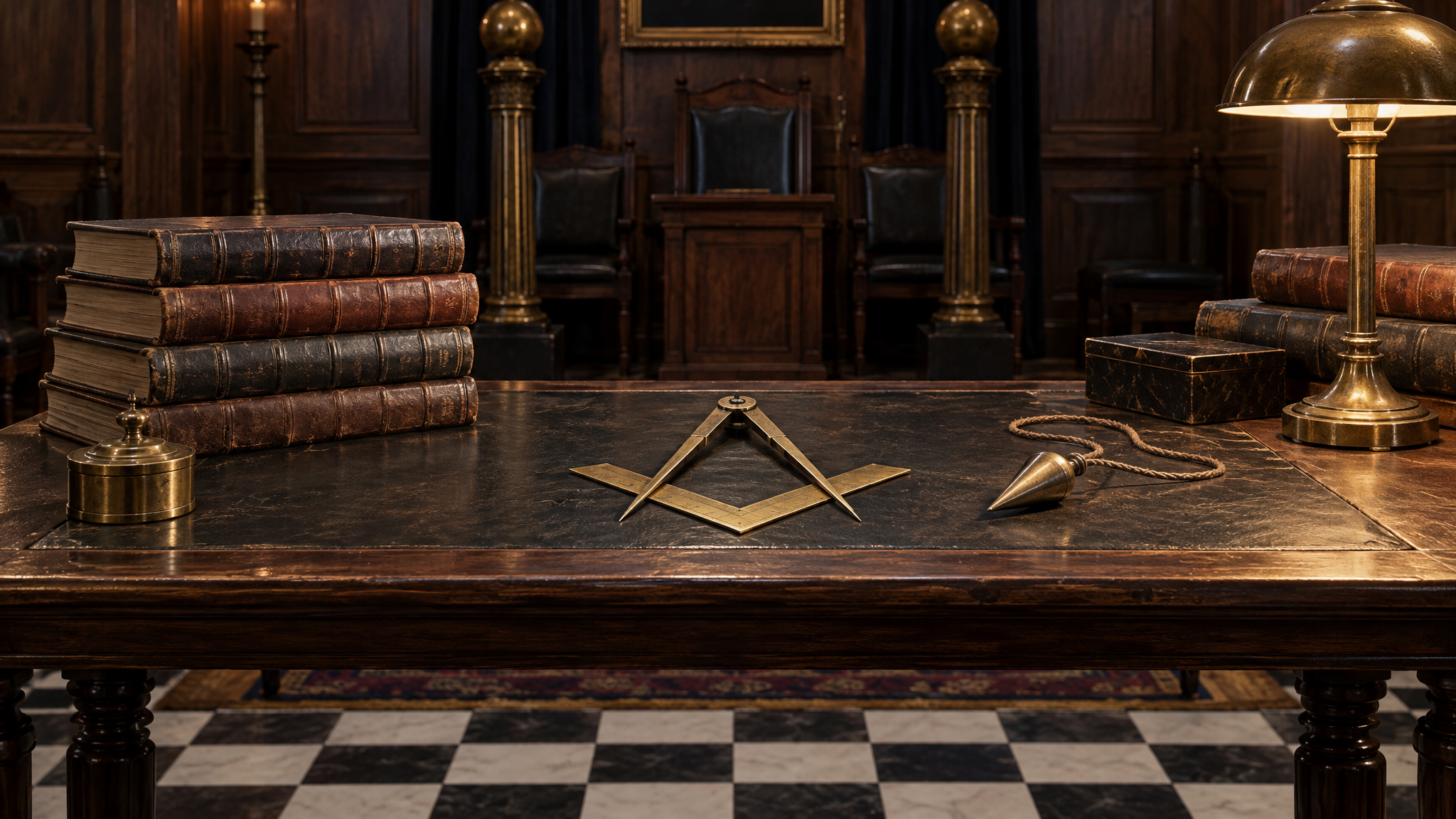
Freemasonry emerged from the stonemasons’ guilds of Britain and took its modern form with the founding of the Grand Lodge of London in 1717. It spread across Europe and the Americas as a fraternal society teaching morality through the symbolism of building.
This guide sets Freemasonry among the other secret and initiatory societies in the archive, and explains how to read the very different kinds of literature it produced.
What It Is
Craft Masonry confers three degrees, Entered Apprentice, Fellowcraft and Master Mason, each built around ritual drama and working tools read as moral symbols. Many “higher degree” systems, such as the Scottish Rite, added chivalric, Rosicrucian and Hermetic material.
The literature ranges from ritual exposés and monitors, through the symbolic interpretations of Pike, Mackey and Wilmshurst, to anti-Masonic polemic. Each needs to be read for what it is.
Why It Matters
Freemasonry was the social matrix in which much eighteenth- and nineteenth-century esotericism grew, from the Rosicrucian grades to the Golden Dawn, whose founders were Masons. It is also the most persistent subject of conspiracy theory, which a historical reading helps to dispel.
Core Texts
Masonic symbolism, ritual monitors and histories.
A Beginner’s Sequence
The symbolic reading
Wilmshurst’s short, influential book reads the Craft as a path of spiritual development.
A symbolic encyclopaedia
Mackey explains the principal symbols and their sources.
The ritual
A nineteenth-century monitor of the degrees; the text itself, without interpretation.
The higher degrees
Pike’s vast lectures on the Scottish Rite. Advanced, and best used as a reference.