The Masonic Shelf
The Craft, its symbols and its historians.
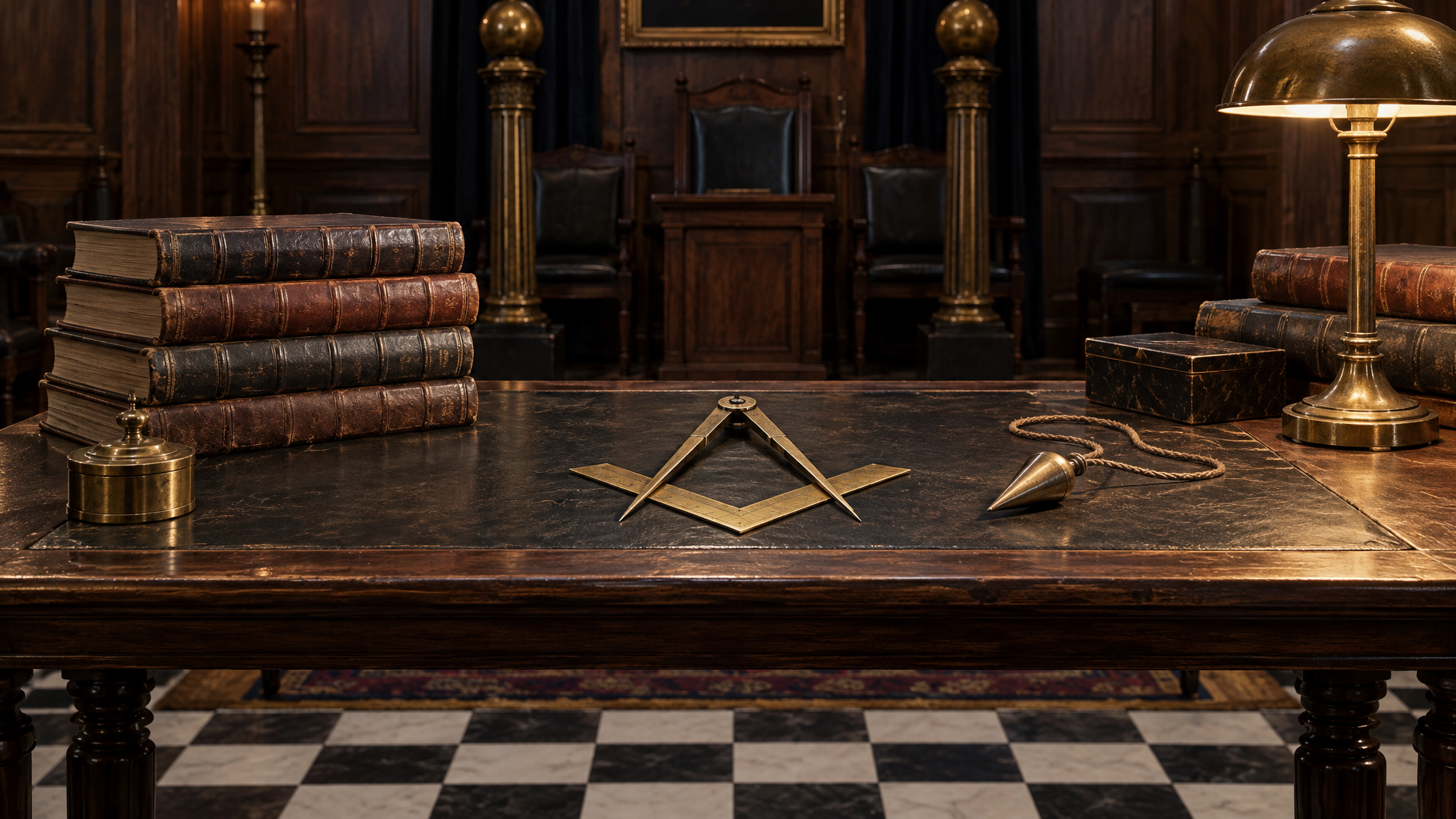
Speculative Freemasonry emerged from the stonemasons’ lodges of Britain in the late seventeenth century and by 1800 had spread worldwide. Its rituals turned the builder’s tools into moral symbols, and its higher degrees absorbed Hermetic, Kabbalistic and chivalric lore.
This shelf keeps the Craft’s interpreters together, Albert Mackey’s symbolism, Albert Pike’s Morals and Dogma, Wilmshurst’s The Meaning of Masonry, alongside ritual monitors and the exposés and critiques that shadowed Masonry from the start. Every item is also tagged Freemasonry for searching.
Masonic literature includes rituals and monitors, histories, symbolic interpretations and hostile exposés, and they should not be confused. Read a history such as Gould’s or Mackey’s first, then the symbolic works of Pike and Wilmshurst, which interpret the degrees in philosophical and mystical terms. Ritual texts show what lodges actually did, while exposés reveal what outsiders feared. Pike’s Morals and Dogma, in particular, is long and idiosyncratic and represents one jurisdiction rather than Freemasonry as a whole. The shelf is best read as the record of a fraternity arguing about its own meaning.
On This Shelf (28)
Morals and Dogma of the Ancient and Accepted Scottish Rite
Albert Pike
The History of Freemasonry, Its Antiquities, Symbols, Constitutions, Customs, &c.: Embracing an Investigation of the Records of the Organisations of the Fraternity in England, Scotland, Ireland, British Colonies, France, Germany, and the United States
Robert Freke Gould
An Encyclopaedia of Freemasonry and Its Kindred Sciences, Comprising the Whole Range of Arts, Sciences and Literature as Connected with the Institution
Albert G. Mackey
An Encyclopaedia of Freemasonry and Its Kindred Sciences, Comprising the Whole Range of Arts, Sciences and Literature as Connected with the Institution
Albert G. Mackey
English · Secret Societies
Some Deeper Aspects of Masonic Symbolism
Arthur Edward Waite
Collected Essays & Papers Relating to Freemasonry
Robert Freke Gould