Egyptian Mysteries
Egypt as source, symbol and imagined origin of the mysteries.
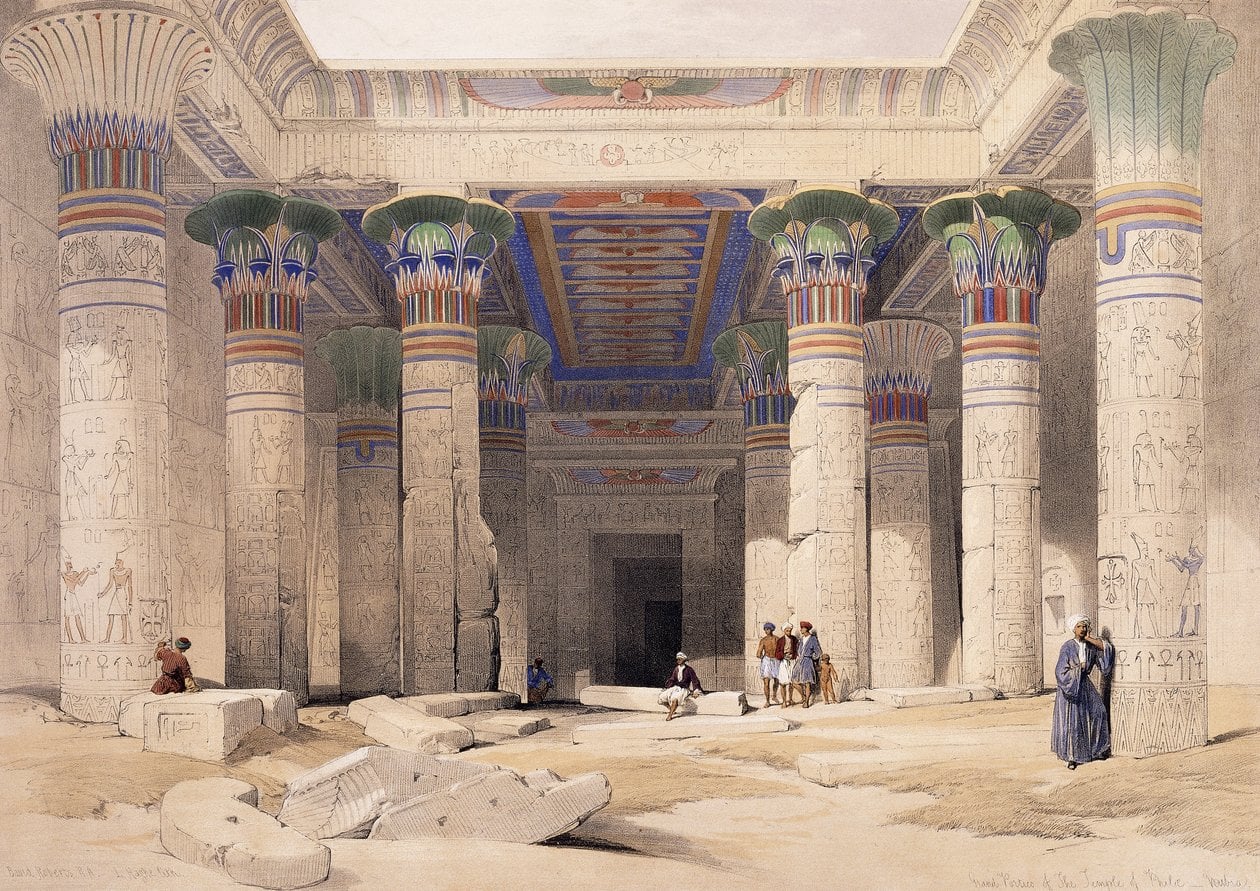
For two thousand years Egypt has been the West’s imagined birthplace of secret wisdom. Greek writers credited it with the mysteries, Renaissance scholars believed Hermes Trismegistus was an Egyptian sage, and the Victorian occult revival filled its temples with pharaonic imagery.
This cabinet sets the genuine Egyptian sources, above all the funerary literature translated by E. A. Wallis Budge, beside the esoteric reception, from Iamblichus’ On the Mysteries to Gerald Massey’s speculative histories. Reading the two together is the best way to separate Egypt from “Egypt”.
Two very different kinds of book share this room. Some are Egyptological editions and translations, such as Budge’s Book of the Dead, which aim to present ancient sources as accurately as their period allowed. Others are Hermetic, Masonic or Theosophical works that treat Egypt as a symbol of primordial wisdom. Both are valuable, but they answer different questions. Read the ancient texts first for what the Egyptians themselves wrote, then the later works for how Egypt was imagined, and notice how often the second group relied on outdated scholarship from the first.
On This Shelf (24)
Development of Religion and Thought in Ancient Egypt
James Henry Breasted
Development of Religion and Thought in Ancient Egypt
James Henry Breasted
English · Egyptian Mysticism
Egyptian Mythology and Egyptian Christianity
Samuel Sharpe
Iamblichus on the Mysteries of the Egyptians Chaldeans and Assyrians
Iamblichus
Iamblichus on the Mysteries of the Egyptians Chaldeans and Assyrians
Iamblichus
English · Neoplatonism & Theurgy
The Mystery of Osiris; or, Egyptian Initiation
R. Swinburne Clymer
Ancient Egypt: The Light of the World Vol. I
Gerald Massey
Ancient Egypt: The Light of the World Vol. II
Gerald Massey
The Light of Egypt, or The Science of the Soul and the Stars. In Two Parts
Thomas H. Burgoyne
The Light of Egypt, or The Science of the Soul and the Stars. In Two Parts
Thomas H. Burgoyne
English · Egyptian Mysticism