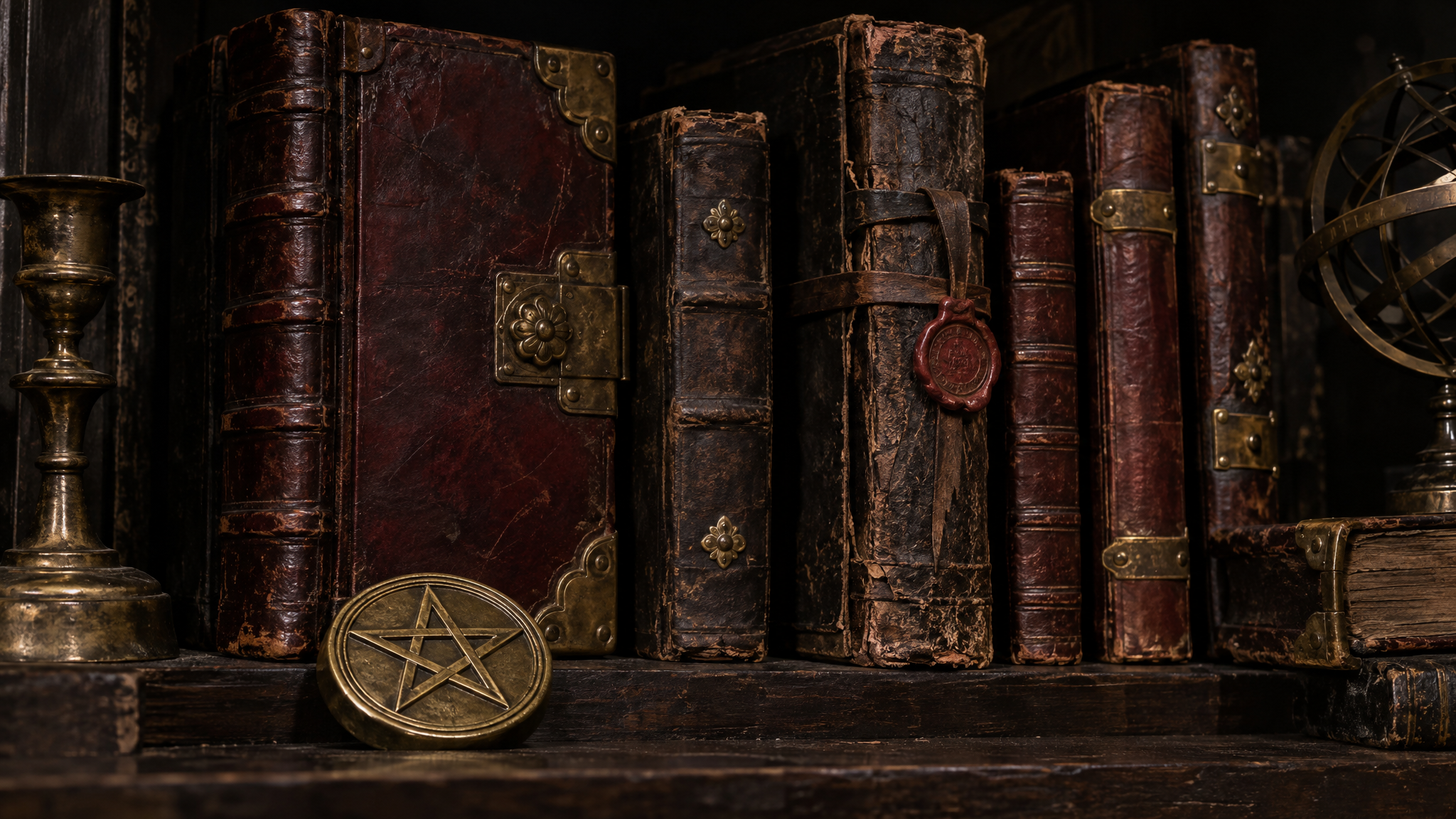
The Solomonic Cycle
The grimoires attributed to Solomon and their descendants.
The magic “of Solomon” is the central thread of the Western grimoire tradition. This shelf gathers the Key of Solomon, the Lesser Key with its catalogue of seventy-two spirits, and the related Solomonic and pseudo-Solomonic works that shaped ceremonial magic from the late Middle Ages to the nineteenth-century revival.
Read these as historical documents first. Most survive in late, composite manuscripts edited by Mathers, Waite and others, and the editorial layer is part of the story: what a Victorian translator kept, cut or rearranged tells you as much about the occult revival as about the medieval magician.
A practical way in is to begin with Mathers’s Greater Key, which gives the fullest picture of the operator’s preparations, tools and prayers, then turn to the Goetia to see how the spirit catalogue was organised. The Heptameron, the Arbatel and the later French grimoires show how the Solomonic model split into learned, devotional and popular branches. Keep an eye on dates and editors throughout: several works here carry an ancient attribution but were compiled in the sixteenth to eighteenth centuries, and the shelf is most rewarding when read as the history of a genre rather than as a single timeless book.
On This Shelf (15)
The Key of Solomon the King (Clavicula Salomonis)
S.L. MacGregor Mathers (trans.)
The Lesser Key of Solomon (Lemegeton)
S.L. MacGregor Mathers & Aleister Crowley
The Lesser Key of Solomon, Goetia: The Book of Evil Spirits; Contains Two Hundred Diagrams and Seals for Invocation and Convocation of Spirits; Negromancy, Witchcraft and Black Art; Translated from Ancient Manuscripts in the British Museum, London; Ceremonial Magic
De Laurence
The Greater Key of Solomon: Including a Clear and Precise Exposition of King Solomon's Secret Procedure, Its Mysteries and Magic Rites; Original Plates, Seals, Charms and Talismans; Translated from Ancient Manuscripts in the British Museum, London
De Laurence Mathers