Historical Tarot and Esoteric Tarot Compared
A Renaissance card game, and how it became a book of wisdom.
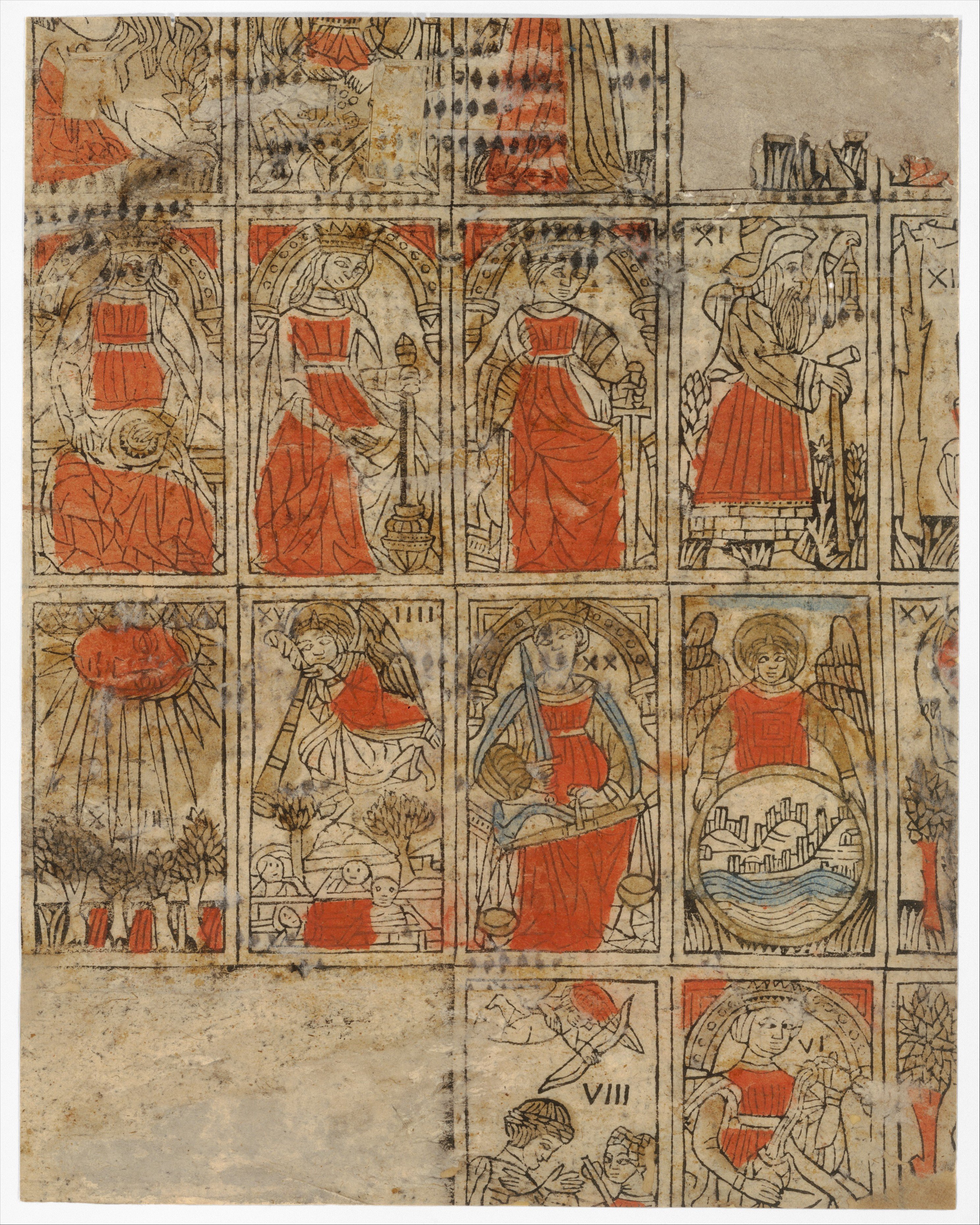
Tarot cards were invented in northern Italy in the fifteenth century for a trick-taking game. Only in the late eighteenth century did French writers claim they encoded ancient Egyptian wisdom, and the occult tarot was born.
What It Is
The historical decks, such as the Visconti-Sforza cards, are courtly luxury objects. The esoteric tarot links the trumps to the Hebrew letters, Kabbalah and astrology, a system developed by Lévi, Papus and the Golden Dawn and popularised by Waite and Crowley.
Why It Matters
Both histories are real, but they are different histories. Knowing the difference makes you a more careful reader of any tarot book.
Core Texts
A historical deck and the major esoteric tarot treatises.
Visconti-Sforza Tarot Cards
Attributed to Francesco Zavattari (formerly to Bonifacio Bembo)
Visconti-Sforza Tarot Cards
Attributed to Francesco Zavattari (formerly to Bonifacio Bembo)
Italian · Tarot
A Beginner’s Sequence
The historical cards
The fifteenth-century Visconti-Sforza deck, as the cards first looked.
Visconti-Sforza Tarot Cards
Attributed to Francesco Zavattari (formerly to Bonifacio Bembo)
Visconti-Sforza Tarot Cards
Attributed to Francesco Zavattari (formerly to Bonifacio Bembo)
Italian · Tarot
The esoteric tarot
Papus and Waite: the occult reinterpretation that shapes most modern decks.