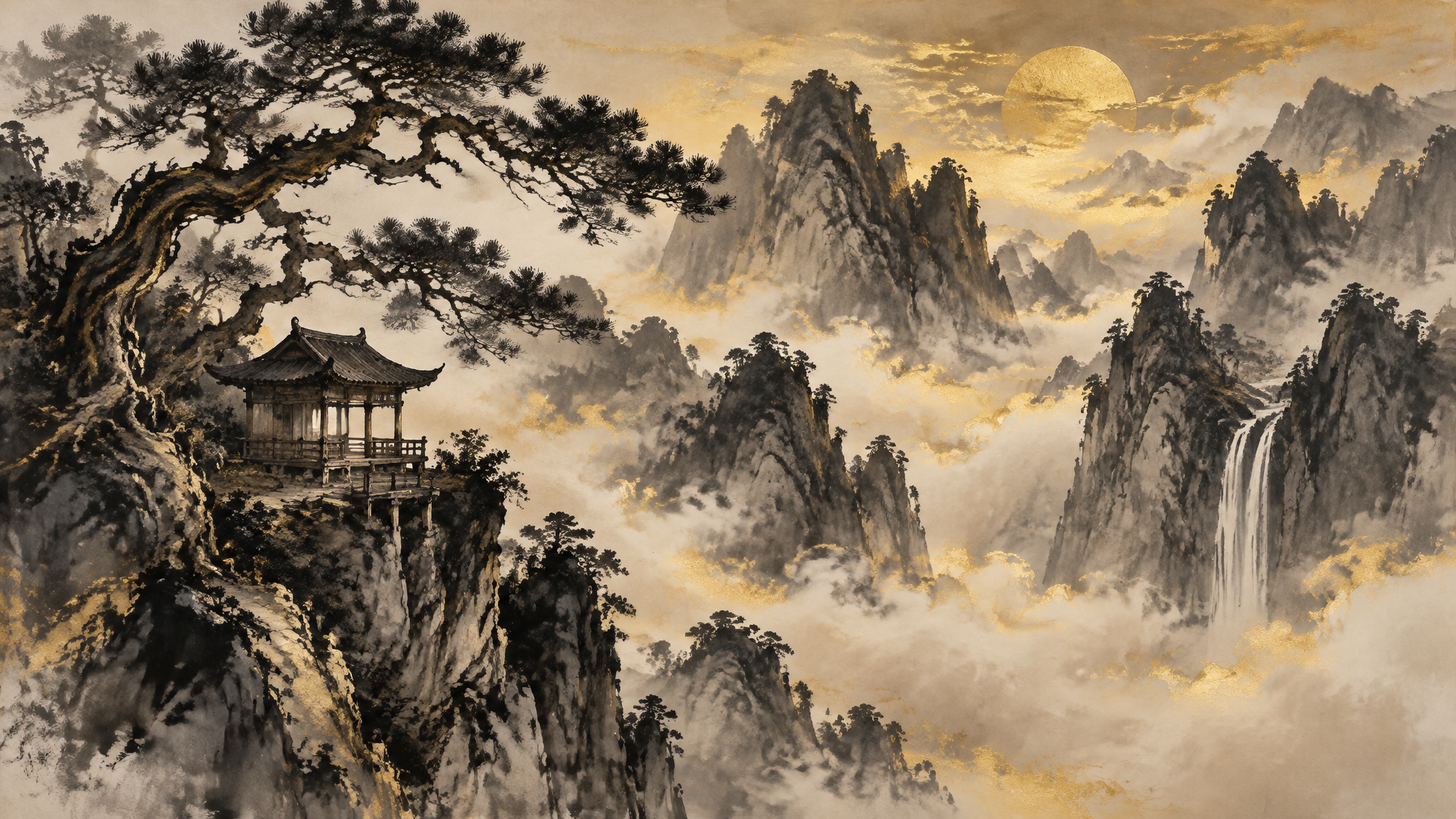
Daoist Esotericism
The Way that cannot be named, and the practices that follow it.
Daoism begins with two short, strange classics, the Tao Te Ching and the Zhuangzi, and grows into a religion of immortals, rituals and inner alchemy. Its esoteric side is concerned with cultivating the body and spirit to return to the Dao.
This guide moves from the philosophical classics to the meditation literature that Western readers first met through Richard Wilhelm and Jung.
What It Is
The Dao is the nameless source and pattern of all things; the sage aligns with it through non-action (wu wei), simplicity and stillness. Later traditions developed neidan, “inner alchemy”, which uses the language of the furnace and elixir to describe the refinement of breath, essence and spirit.
Why It Matters
Daoist texts are among the most translated works in the world, and the Secret of the Golden Flower shaped Jung’s psychology of individuation. Comparing translations is itself an education in how Western readers have remade Chinese thought.
Core Texts
Several translations of the Tao Te Ching, the Zhuangzi and meditation literature.
A Beginner’s Sequence
The classic
Eighty-one short chapters. Read two translations side by side; the differences are instructive.
A commentary
A reading of the Tao Te Ching that draws out its spiritual and practical meaning.
The Daoist imagination
The Zhuangzi’s parables and paradoxes: butterfly dreams, useless trees, the cook who never dulls his knife.
Inner alchemy
A meditation text on circulating the light, the classic introduction to neidan in the West.